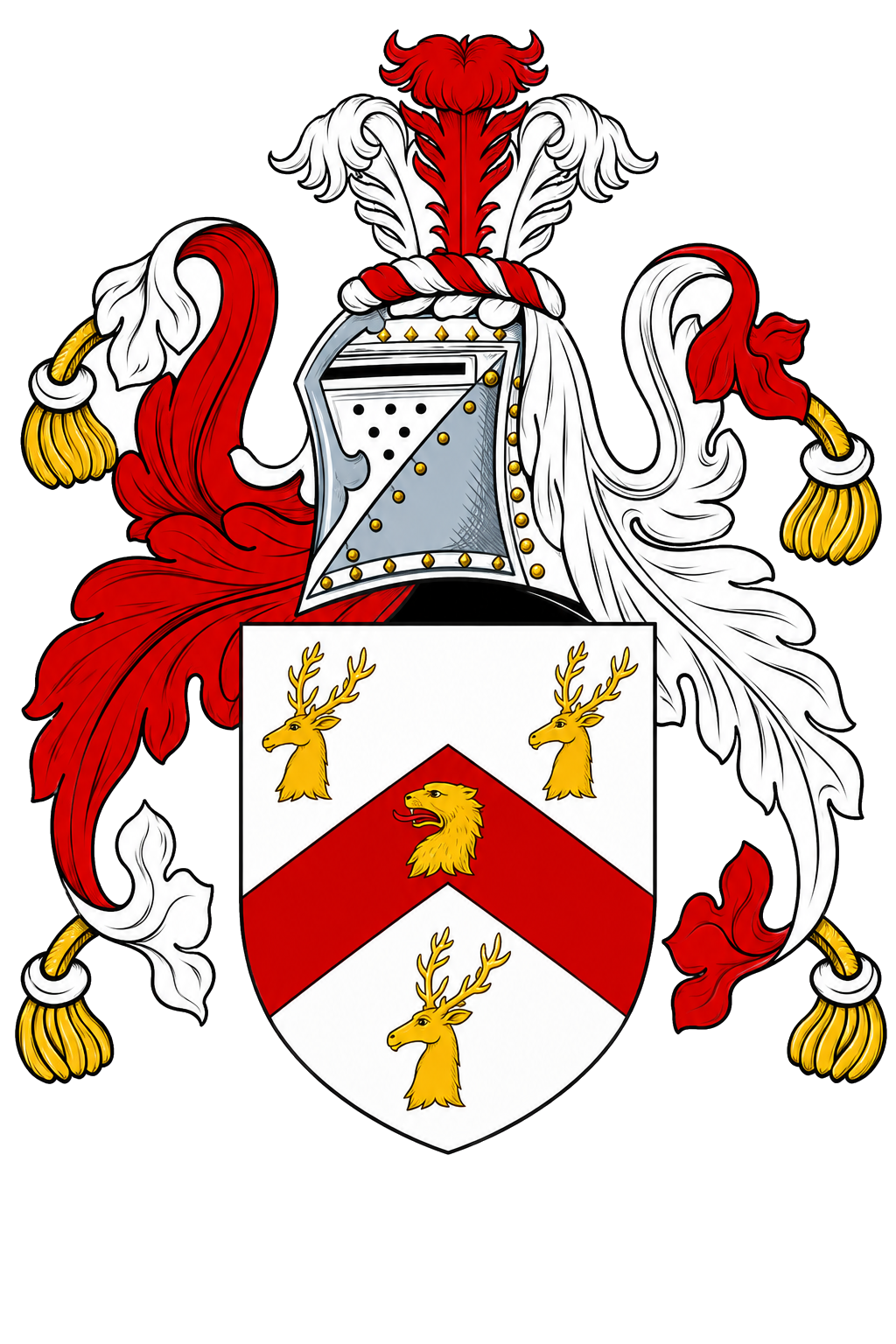
The Legend of Cú Mhidhe—the Hound of Meath, protector of his people and guardian of the McNamee line.
Chapter I
The Northern Gate
In the twilight of the eleventh century, the map of Ireland was not drawn with ink upon parchment, but carved with iron into the earth. It was a world where a man’s territory extended only as far as his sword could reach, and a clan’s survival depended upon the vigilance of its protectors.
In this volatile age of kings and raiders, the valley of Ardstraw stood as a perilous bottleneck—the fortified northern gate to the Kingdom of Ailech and the sovereign lands of the O’Neill dynasty. To hold the keys to this river valley, a commander needed the speed of the wind and the unshakable protective ferocity of the wild.
Chapter II
The Name He Earned
Out of the elite warrior aristocracy arose a man whose birth name was cast aside, overwritten by the terrifying and revered title he earned through decades of continuous warfare: Cú Mhidhe—The Hound of Meath.
Cú means hound, but in the Gaelic warrior tradition it carried a greater meaning: guardian, champion, warrior and protector. The name did not describe reckless violence. It described the disciplined defender who watched the boundary, protected the vulnerable and met danger before it reached his people.
Born about 1010–1015 AD, in the generations following the historic northern migration of 911 AD, Cú Mhidhe came of age during brutal territorial realignment. A title of such weight was not given to an unproven young fighter. It had to be earned across years of survival—through bog ambushes, night raids, fractured bones and the hard judgment required to bring warriors home.
They called him Dangerous—not because he was reckless, but because he was completely in control.
Chapter III
The Shield of Ulster
Cú Mhidhe distinguished himself in the relentless border conflicts that peaked during the 1040s and 1050s AD. The expansionist O’Neill High Kings of the north drove military campaigns southward into the midlands in pursuit of dominance over the High Kingship of Tara. The southern forces of the Kingdom of Meath answered with violent counter-invasions aimed into the underbelly of Ulster.
Cú Mhidhe became the operational anvil against those southern hammer blows. His defining achievement was the defense of a strategic river ford near Ardstraw. There, the legend holds, his outnumbered warriors broke the vanguard of a massive Meath raiding army and drove its retreat through the forests.
He did not seek a fight for its own sake. He knew the line and never crossed it. He treated others with respect, but no one disrespected his kin or threatened anyone under his protection. He did not need to raise a hand or raise his voice. One look. One word. That was usually enough.
Chapter IV
The Rider on the Ridge
Silhouetted against the dark, heavy skies of County Tyrone, the central image of his legend remains fixed upon the ridge. He sat bareback on a swift, sure-footed warhorse, balancing without stirrups through the iron strength of his legs. In his right hand rested a long ash-wood throwing spear; at his hip, a broad-bladed iron sword.
Below him, ancient Ardstraw lived within a deep wooden-palisaded ringfort. Inside stood the homes of his people and the black cattle that formed the true currency of the Gaelic world. He was the Hound—the defender whose existence was defined by watching the southern horizon.
When warning horns sounded, his horsemen did not crash blindly into enemy lines. They struck with thundering speed, hurled volleys of spears and disappeared into the tree line before the invaders could answer.
Chapter V
Between the Cross and Ancient Stone
Cú Mhidhe lived a magnificent but demanding life, grounded in a world where Christian faith stood beside older mysteries. He was a baptized Christian, yet he walked among traditions that remembered the land itself as alive.
He knew the local account that the oak forests of Ardstraw had whispered a collective “Amen” to Saint Eoghan centuries earlier. When he passed the prehistoric stones of the Ballyrenan Portal Tomb, he regarded the Cloghogle with ancient reverence—table stones raised by the giants of old to mark the boundaries of the world.
Under Brehon Law, he maintained a large and powerful household. He was a battle-hardened patriarch whose family would survive him in both blood and name.
Chapter VI
The Hound’s Final Covenant
Cú Mhidhe most likely lived into his forties, fifties or even sixties, dying between 1065 and 1075 AD. His was a lifetime that defied the brutal odds of the age.
As a Christian noble, he was not buried with his weapons or his horse. He was washed, wrapped in a simple white linen shroud and laid directly in the earth facing east within the sacred grounds of Ardstraw Monastery, near present-day Castlederg in County Tyrone, Northern Ireland.
To secure an enduring covenant of prayer, Cú Mhidhe gave his vast herds of cattle to the monks. His earthly wealth became spiritual armor: for generations after his death, daily prayers and Masses would be offered for his soul.
History records the ending of a mortal life. The legend says the protector’s watch had only changed.
Chapter VII
The Sons of the Hound
The ultimate proof of the Hound’s success lived in the strength of his bloodline and in the choice made by his children. His sons and daughters carried such pride in his protective and military legacy that they set aside their older tribal name and called themselves Mac Con Midhe—Sons of the Hound of Meath.
A warrior’s earned title became a hereditary family surname. The promise of the defender was no longer carried by one man alone. It belonged to the generations that followed him.
Chapter VIII
The Name Survives
Following the Anglo-Norman invasion of 1169, Cú Mhidhe’s descendants understood that land could no longer be protected by the sword alone. They laid down the physical blade and lifted the ink-dipped quill, transforming the Ardstraw estate into a renowned Bardic School.
For four hundred years they served as hereditary master poets, historians and political advisers to the O’Neill kings. The first Hound had protected his kin from physical death on the battlefield. His bardic descendants protected the family’s memory from historical death.
Through the devastation of the Ulster Plantation in the early 1600s, the confiscation of their ancestral valley and the systematic erasure of the Gaelic language, Mac Con Midhe was reshaped across generations of speech and recordkeeping into the name McNamee.
The spelling changed. The promise did not.
Chapter IX
1883: The Long Ride West
In 1883, Janice McNamee’s branch carried that ancient name aboard an iron-hulled steamship from Belfast. They crossed the Atlantic and arrived at Castle Garden, New York’s historic immigrant processing center.
Francis Joseph McNamee, born in Ireland in 1878, was five years old when he arrived with his parents, Francis Sr. and Mary McNamee—Janice’s grandfather and great-grandparents. They were not the first McNamees in America; 1883 marks the arrival of this branch of the family. From Manhattan, they followed the rail lines west into the industrial valleys near Pittsburgh and Monroeville, Pennsylvania.
The family legend says the Rider crossed with them. The ancient protector who had watched the road to Ardstraw now guarded his descendants on the ocean, at the rail platform and in their new home.
Chapter X
Every Age Gives Him a Mount
The horse carried him across Ireland. The steamship bore him over the Atlantic. The train drew him through Pennsylvania’s mountains. In later generations, the propeller airplane took him into the sky, while the truck and motorcycle carried him along the American road.
His kin made homes near Pittsburgh, throughout Ohio, in Philadelphia and in New York. The distances grew, but the Hound never measured duty in miles.
The mount changes. The mission never does.
Chapter XI
The Hound Comes to White Haven
In 2016, when Janice and John purchased the property that would become Holy Ghost Distillery, the Rider came to White Haven with them. He had watched over Janice and her children; now he chose to remain where the McNamee clan and its many branches would gather.
White Haven gave him a mountain watchpoint within reach of Pittsburgh, Ohio, Philadelphia and New York. McNamees would come from every direction to visit the distillery, renew family bonds and raise a glass together. At the entrance to the tasting house, the sign Home Stead Commons · Est. 1883 honors the year Janice’s branch arrived in America.
The ancient northern gate had been Ardstraw. His new watch stood in White Haven.
Chapter XII
The Mark and the Spirit
The Gaelic words uisce beatha mean “water of life.” Grain from the earth, water from the land, fire controlled by human hands and time combine to create something greater than any one of them alone.
At Holy Ghost Distillery, the McNamee name is carried by McNamee’s Black Irish Bourbon and Whiskey. The legend welcomes all who raise the water of life with respect—family by blood, family by friendship or family by the shared glass—under the Hound’s watch.
Cú Mhidhe also allowed his Spirit and image to be imprinted upon shirts bearing the McNamee name. The shirt became another mount, allowing the Rider to travel with those who wear his mark and to protect the people around them.
The whiskey carries his story. The shirt carries his image. The name carries his Spirit.
He respects all people, but he permits no disrespect toward his kin or anyone within his protection. He never raises a hand without cause. One look. One word. One quiet reminder of where the line stands.